Nitric Oxide Topic 03
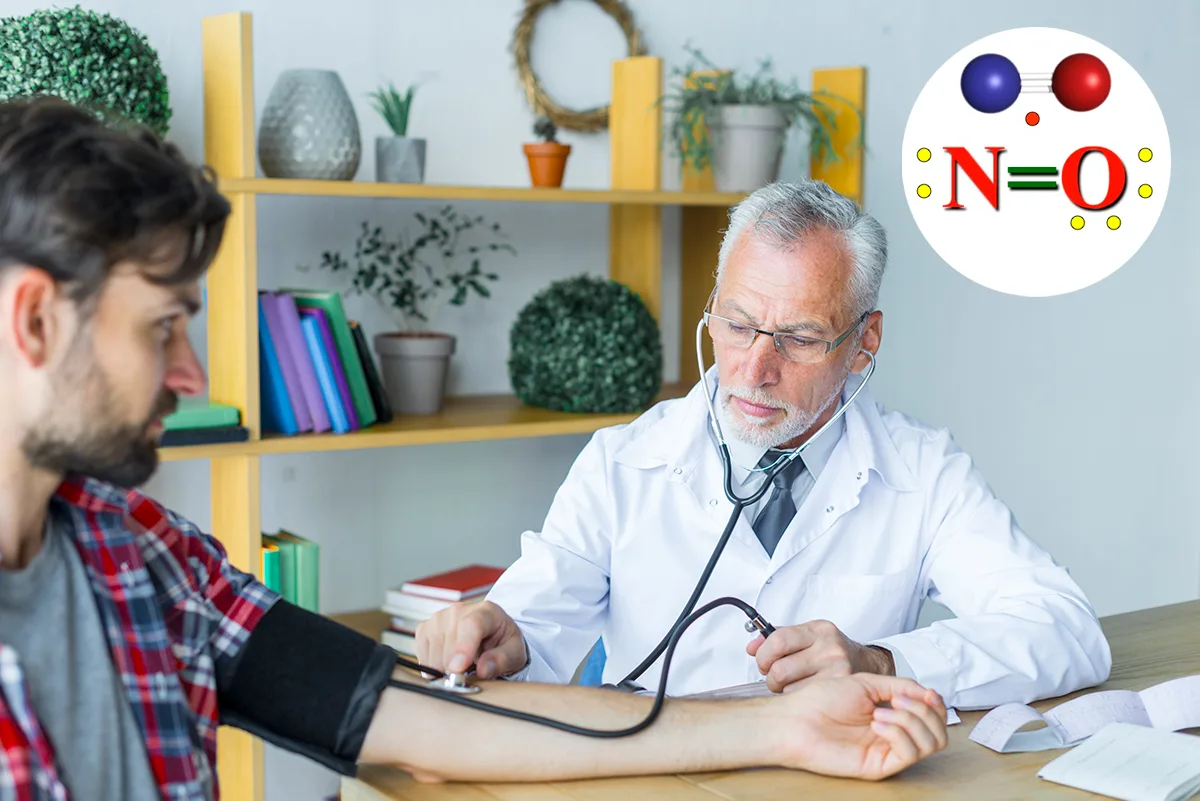
Nitric Oxide, also known as NO, is a naturally occurring signaling molecule produced in the arteries, nerves and many other tissues in the body.
A naturally occurring signaling molecule
The Fundamentals
Nitric Oxide, also known as NO, is a naturally occurring signaling molecule produced in the arteries, nerves and many other tissues in the body. In its natural state, NO is a very unstable gaseous molecule that lasts for only a second or less after being produced inside cells. But this is long enough for NO to elicit its effects in the body. NO is produced from L-arginine, one of 23 amino acids present in all proteins. Another amino acid, not from protein but rather from certain fruits, L-citrulline, is first converted to L-arginine, which is then converted to NO. Therefore, both L-arginine and L-citrulline are sources of NO, and eating healthy protein and fruit will increase NO production. The first discovered effect of NO in the body was vasodilation, which means that NO allows more blood to flow through the arteries and veins, bringing about improved blood flow to all organs, especially the heart, brain and skeletal muscles. Vasodilation also helps to maintain normal blood pressure. In addition, another important function of NO is to help prevent formation of unwanted blood clots in arteries, thereby reducing the incidence of stroke and heart attack.
Basics at a Glance
Produced in the arteries, nerves and many other tissues
Made from the amino acid L-arginine
L-citrulline is converted to L-arginine, then to NO
First discovered effect: vasodilation
Helps maintain normal blood pressure
Supports learning, memory and information recall
In the Brain
Nitric Oxide also provides health benefits outside the cardiovascular system. For example, NO produced in the brain is essential for learning, memory, and information recall. Dementia, including Alzheimer’s disease, is associated with reduced levels of NO in the brain. NO also maintains normal blood flow in the brain and works to prevent formation of unwanted blood clots in the brain, which can cause stroke. It’s interesting to note that the brain makes more NO than does any other organ in the body but scientists still do not understand exactly why. Therefore, there are likely other beneficial actions of NO in the brain.
Throughout the Body
NO acts as an anti-inflammatory molecule not only in our arteries and brain but also in our joints and in our digestive system. Anti-inflammatory effects are essential to prevent excessive swelling and pain in many organs of the body. Anti-inflammatory effects also reduce and prevent inflammation in our arteries, which is a common cause of atherosclerosis and coronary artery disease. Therefore, NO exerts a protective action in the cardiovascular system.
In the skin, NO works to maintain normal blood flow and to protect the skin against the dangerous UV radiation from the sun. For example, when the sun’s rays hit the skin, more NO is produced, which triggers the darkening of the skin (melanin pigment dispersion) and affords protection against the UV light.
Did you know that NO is the principal mediator of erectile function in men and women? In normal healthy people sexual arousal triggers NO production, which in turn stimulates erectile function. Viagra and related drugs for treating erectile dysfunction in men work by markedly improving the action of Nitric Oxide to promote blood flow into erectile tissue.
NO is often referred to as the “magic anti-aging molecule”.
Why nitric oxide matters as we age
The Aging Molecule
As you can see, Nitric Oxide is quite a unique signaling molecule that is essential for the proper function of nearly all organs in our body. To top it off, NO is often referred to as the “magic anti-aging molecule”. As we age, our NO levels steadily decline. NO levels are highest in the developing fetus and remain high through the first 10 or 15 years of life, after which time NO steadily declines with the aging process. Along with the aging process and declining NO levels comes increased risk for many disorders and diseases. Such risks are further heightened by unhealthy lifestyle such as poor nutrition and lack of regular physical activity.
Mechanism
At first, the mechanism by which NO elicits its biological actions was thought to be exclusively via stimulation of the production of another signaling molecule, cyclic GMP. NO activates an enzyme, guanylate cyclase, which in turn catalyzes the conversion of GTP to cyclic GMP. The cyclic GMP then triggers a sequence of enzymatic reactions resulting in the modification of proteins (via phosphorylation), which translates to a change in protein function. A great example is vasodilation, where endothelium-derived NO diffuses into nearby arterial smooth muscle cells to stimulate the formation of cyclic GMP, which then phosphorylates components in the smooth muscle cells to bring about relaxation and vasodilation. However, more recently, another mechanism by which NO produces its biological actions has been discovered.
A Second Mechanism
This process is termed protein S-nitrosylation. Here’s the way it works. Some of the NO formed from L-arginine by NO synthase (either endothelial, neuronal or inflammatory isoforms) reacts with R-SH (R signifies a specific protein) under physiological conditions of pH and the presence of transition metals to form a covalent bond between the S of R-SH, yielding R-SNO. This is the S-nitrosylated protein formed by the process of protein S-nitrosylation. The R-SNO now has altered and distinct chemical properties compared to the starting R-SH. Just as one example, if R-SH represents the catalytic site of an enzyme, the enzyme’s activity or properties will be altered, such as enzyme inhibition or activation.
Protein S-nitrosylation influences the actions of thousands of important proteins in the body. Therefore, by definition, NO can control and regulate protein function.
This process can be a dual-edged sword in that the S-nitrosylated protein can trigger critical physiological actions such as transport of NO by hemoglobin to distant sites that need NO to improve blood flow. However, some S-nitrosylated proteins can elicit harmful effects in the nervous system to bring about neuronal cell death, leading to neurodegenerative disorders such as autism. Novel therapeutic strategies are being developed to prevent or at least control these processes.
A Storage Pool for NO
Nitrate (NO3-) and nitrite (NO2-) act as a vital storage pool for Nitric Oxide (NO). When the body’s primary NO-producing enzyme (endothelial NOS) fails during hypoxia, these compounds undergo a stepwise reduction to generate NO, dilating blood vessels and maintaining tissue oxygenation.
This NO3- → NO2- → NO pathway works through a continuous recycling process.
A Continuous Recycling Process
NO3–→NO2–→NO
Step 1
Dietary nitrate (found in leafy greens and root vegetables) is absorbed into the bloodstream, concentrated in the salivary glands, and secreted into saliva. Commensal oral bacteria reduce the nitrate into nitrite.
Step 2
When swallowed, salivary nitrite hits stomach acid and is non-enzymatically converted into nitric oxide. The remaining nitrite enters the circulation.
Step 3
As nitrite travels through the body, enzymes and proteins (like hemoglobin and myoglobin) reduce it into bioactive NO exactly where it is needed.
Keep Exploring